Soundbars often change inputs due to automatic input detection features like HDMI-CEC, which can switch inputs when devices power on or off. Misconfigured HDMI settings and interference from other electronics can further complicate connections. Additionally, remote control issues, such as low battery or interference, can lead to erratic behavior. To maintain stability with your soundbar, it’s essential to keep your software updated and check all settings. Discover effective ways to troubleshoot these issues to guarantee a seamless audio experience with your soundbar.
Key Takeaways
- Automatic input detection features like HDMI-CEC can cause soundbars to switch inputs unexpectedly when connected devices power on or off.
- Bluetooth interference from nearby devices can lead to unstable connections, resulting in unwanted input changes in soundbars.
- Misconfigured HDMI settings and conflicting commands from devices often trigger unexpected input switching in soundbars.
- Low battery levels in the remote control can cause erratic behavior, leading to unintentional input changes in soundbars.
- Regular maintenance, including checking connections and resetting devices, can help prevent persistent input switching issues with soundbars.
Understanding Automatic Input Detection Features
When you connect multiple devices to a soundbar, you might notice that it sometimes switches inputs on its own, which can be both convenient and frustrating.
This behavior often stems from automatic input detection features, including HDMI-CEC, which allow devices to communicate and trigger input switching based on active signals.
Automatic input detection features like HDMI-CEC enable devices to communicate, triggering input switching based on active signals.
If a connected device powers on or off, your soundbar may react by changing inputs. It can also revert to Bluetooth if no signal is detected.
While some soundbars offer the option to disable this feature, interference from nearby devices can complicate matters, leading to unexpected input switching.
Understanding these features can help you optimize your soundbar experience.
Common Reasons for Input Switching
You might experience input switching on your soundbar due to Bluetooth interference or misconfigured HDMI settings.
When multiple devices are connected, Bluetooth connections can become unstable, prompting the soundbar to search for a stable link.
Additionally, incorrect HDMI settings can lead to unexpected input changes, causing frustration during your viewing experience with your soundbar.
Bluetooth Interference Issues
While Bluetooth technology offers convenience, it can also lead to frustrating input switching issues with soundbars. When your soundbar is in discoverable mode, nearby devices might attempt to connect, causing unwanted input switching. Automatic pairing attempts from previously connected devices can disrupt your listening experience, especially if interference from Wi-Fi routers or microwaves is present. Additionally, low battery levels in the remote may result in erratic behavior.
| Issue | Effect on Soundbar | Solution |
|---|---|---|
| Nearby devices | Unintentional input change | Disable discoverable mode |
| Signal interference | Disrupted Bluetooth signal | Move away from electronics |
| Low remote battery | Erratic input switching | Replace batteries |
To ensure a smooth listening experience, it’s advisable to manage these potential interference issues effectively.
HDMI Settings Misconfiguration
HDMI settings misconfiguration often leads to frustrating input switching issues, particularly due to the HDMI-CEC (Consumer Electronics Control) feature in soundbars.
When soundbars are connected to other devices, conflicting commands can cause them to change inputs unexpectedly. If you’re using HDMI ARC (Audio Return Channel) with your soundbar, incorrect settings can prevent it from recognizing the correct audio source, resulting in unwanted input switching.
Additionally, power outages may reset HDMI settings, reverting the soundbar to default inputs. To mitigate these issues, ensure all your connected devices are updated and carefully review your HDMI-CEC settings.
This will help provide a more stable audio experience with your soundbar, free from interruptions.
Interference From Other Devices
When using a soundbar, interference from nearby Bluetooth devices can lead to unexpected input changes.
Your soundbar may automatically switch to Bluetooth mode if it detects signals from other devices, such as smartphones or tablets.
To minimize these disruptions and enhance your audio experience, consider turning off or unpairing other Bluetooth devices while enjoying your soundbar.
Bluetooth Device Interference
Bluetooth device interference can significantly affect the performance of soundbars, often leading to unexpected input switching. If your soundbar frequently switches inputs, it may be due to nearby Bluetooth devices trying to connect. To ensure a stable connection and reduce interruptions, consider disconnecting any unused devices.
| Action | Effect | Recommendation |
|---|---|---|
| Enable discoverable mode | Increases interference | Turn off when not in use |
| Multiple devices nearby | Prioritizes strong signals | Limit the number of active Bluetooth devices |
| Automatic pairing feature | Causes input switching | Disable if not needed |
| Frequent input changes | Annoying and distracting | Unpair any unused connections |
HDMI CEC Conflicts
While enjoying your favorite movie or game with your soundbar, you might notice it unexpectedly switching inputs, which can be frustrating.
This often happens due to HDMI CEC conflicts, where devices like Blu-ray players or gaming consoles inadvertently send commands that trigger input changes on your soundbar.
If you’re using a Sony HT-CT soundbar, make sure to check its sensitivity to these signals, as it might switch inputs when another device turns on or off.
To prevent this issue, consider disabling HDMI CEC on your TV or soundbar.
Additionally, regular firmware updates can improve compatibility and ensure your surround sound experience remains stable and enjoyable.
Signal Range Issues
Soundbars can unexpectedly switch inputs due to interference from other wireless devices in your environment. When multiple Bluetooth devices are nearby, signal range issues can arise, causing confusion in the soundbar’s input selection.
Common culprits include Wi-Fi networks, microwaves, and other Bluetooth gadgets that disrupt your soundbar’s stable connection. The automatic pairing feature can further complicate matters, as the soundbar may attempt to connect to previously paired devices.
To mitigate these issues, set your soundbar to a specific input mode and disable Bluetooth discoverable mode, ensuring a more reliable audio experience without unwanted interruptions.
Troubleshooting Remote Control Issues
Have you ever experienced your soundbar unexpectedly switching inputs on its own? This frustrating issue is often linked to problems with the remote control.
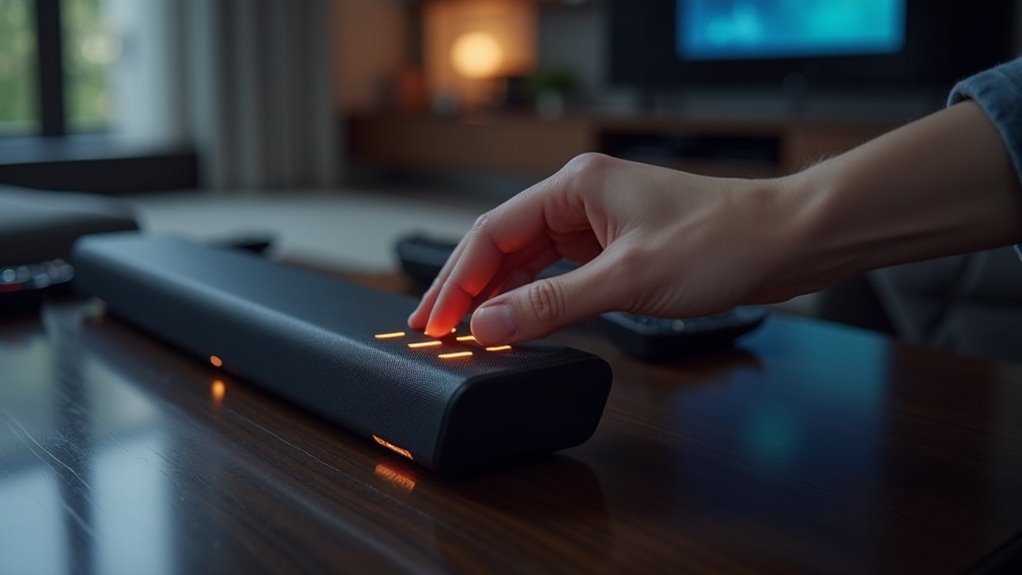
Start by checking the batteries in your remote; low power can cause erratic behavior. Ensure that your remote is correctly paired with your soundbar, as a lost connection may lead to unintentional input changes.
Additionally, be mindful of interference from other electronic devices that could disrupt the remote’s signal. To maintain optimal performance, regularly replace the batteries in your remote.
If you continue to encounter issues, consider resetting your soundbar to recalibrate the remote settings and eliminate any glitches. By following these steps, you can improve your soundbar experience and avoid those annoying input switches.
Software Glitches and Firmware Updates
Unexpected input switching can also stem from software glitches within your soundbar. These bugs often reside in the firmware, which manufacturers regularly update to address issues, improve performance, and enhance device compatibility.
To mitigate input switching problems, you should periodically check for available firmware updates for your soundbar. Outdated software can increase the frequency of input changes and connectivity issues.
Resetting your soundbar to factory settings might resolve erratic behavior, but make sure you’ve installed the latest firmware first. Following the troubleshooting guides from soundbar manufacturers will often recommend firmware updates as a primary step in resolving persistent input switching concerns.
HDMI-ARC and CEC Settings
When configuring your soundbar for optimal performance, understanding HDMI-ARC and CEC settings is crucial for a seamless audio experience.
Understanding HDMI-ARC and CEC settings is vital for achieving the best performance from your soundbar.
These features can unintentionally cause your soundbar to switch inputs. Here’s how to optimize them:
- Enable HDMI-ARC on both your TV and soundbar for two-way communication, ensuring that audio flows correctly from your TV to your soundbar.
- Adjust CEC settings to confirm proper control of your soundbar without unwanted input changes, allowing for easier operation with a single remote.
- Check connections to ensure that all devices are properly linked and functioning together as intended.
- Reset devices after power outages to restore original settings, which can help prevent any unwanted input switching on your soundbar.
Best Practices for Maintaining Your Soundbar
To ensure your soundbar continues to deliver optimal performance, it’s vital to follow best maintenance practices.
Regularly inspect and secure all cable connections to prevent loose connections that might lead to input switching issues. Keep your soundbar’s firmware updated to improve its functionality and minimize bugs.
Turn off Bluetooth discoverable mode when it’s not in use to avoid interference from nearby devices. Ensure that HDMI ARC and CEC settings are correctly configured on both your soundbar and TV for a reliable connection.
Lastly, limit the number of paired devices to reduce confusion in input selection, allowing for uninterrupted audio enjoyment.