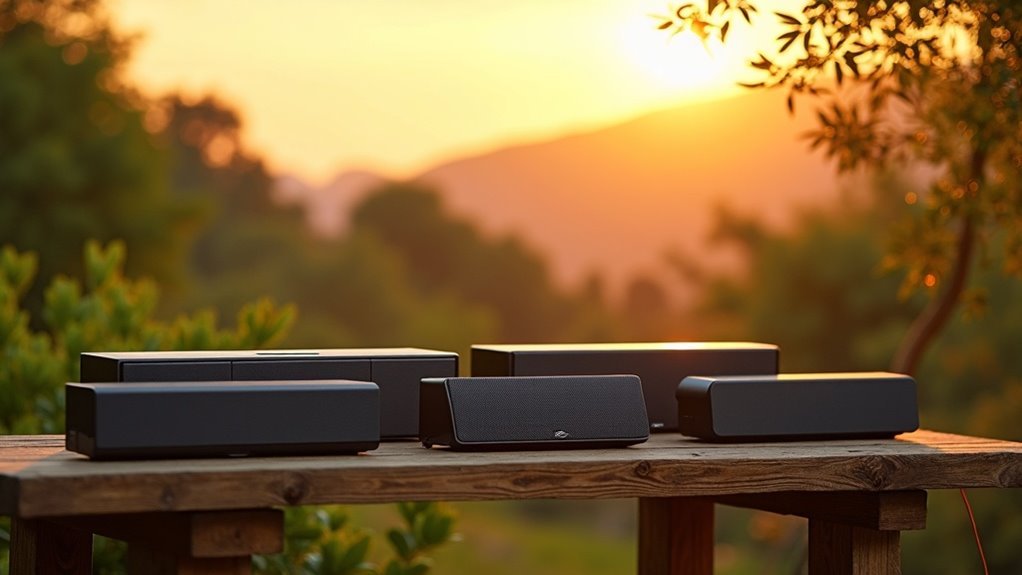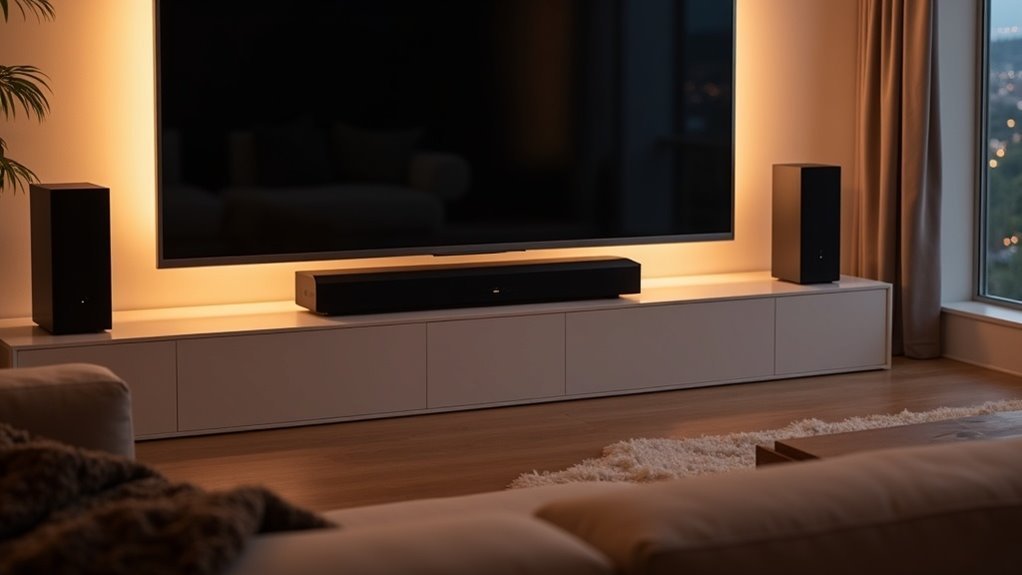
You should consider adding rear speakers to your soundbar if you want to elevate your audio experience, particularly in larger rooms or dedicated home theaters. Rear speakers provide immersive surround sound and enhance spatial audio effects, making movies and gaming more enjoyable. Before making a purchase, ensure that your soundbar supports surround sound functionality and take into account how the size of your room will influence speaker placement. Whether you choose wired or wireless rear speakers, proper setup is crucial for optimizing sound quality. Explore more tips on enhancing your audio environment for the best soundbar experience.
Key Takeaways
- Add rear speakers to your soundbar setup when seeking an immersive audio experience for movies and gaming, enhancing sound depth and directionality.
- Consider integrating rear speakers if your soundbar supports 5.1 surround sound or higher for optimal audio performance.
- If your room is spacious, adding rear speakers can significantly enhance sound quality and overall listening experience.
- Evaluate your audio preferences; if you enjoy a deep engagement with sound, rear speakers can take your experience to the next level.
- Opt for rear speakers when your room’s layout and aesthetics permit proper placement, ensuring sound reflection is not obstructed.
Understanding the Benefits of Rear Speakers
When you incorporate rear speakers into your soundbar setup, you significantly elevate your audio experience by crafting a more immersive soundstage.
Rear speakers provide true surround sound, enhancing your home theater setup with audio that emanates from behind or the sides. This dynamic arrangement activates distinct channels, allowing you to appreciate intricate background sounds that standard soundbars often overlook.
When combined with Dolby Atmos, rear speakers amplify spatial audio effects, bringing cinematic moments to life.
However, it’s important to consider your room’s acoustics and speaker placement to ensure optimal performance, particularly in smaller spaces where sound may not fully develop.
Assessing Your Room Size for Rear Speakers
When evaluating your room size for a soundbar, consider the dimensions carefully.
In a small space, like a 9′ x 9′ room, the placement of a soundbar can significantly influence sound quality, potentially enhancing clarity and immersion.
Proper positioning is vital to achieve the desired audio experience, making it essential to determine if a soundbar is a worthwhile investment for your setup.
Room Dimensions Consideration
When considering the addition of rear speakers to your soundbar setup, it’s crucial to take into account your room dimensions.
For instance, in a small room measuring 9′ x 9′, rear speakers may not provide the desired audio experience due to limited space and the likelihood of audio muddiness.
Here are some factors to keep in mind:
- Room acoustics: Cluttered spaces can negatively impact sound quality.
- Speaker configuration: A full 5.1 setup might be too much for smaller areas, making a simpler 2.0 or 3.1 system more suitable.
- Optimal placement: For the best sound distribution, rear speakers should be positioned at the sides and slightly behind the main listening area.
Speaker Placement Importance
To guarantee an ideal audio experience, it’s vital to carefully assess soundbar placement, especially in smaller rooms.
In a compact 9′ x 9′ space, adding additional speakers may not greatly improve sound quality due to limited room acoustics, which can lead to muddiness.
Positioning the soundbar directly in front of the main seating area and angling it slightly upward toward the listeners assures peak sound distribution. Additionally, mounting it at ear height enhances immersion during movies or gaming.
While a soundbar can deliver impressive audio depth, in confined spaces, the benefits may diminish if not placed correctly, making proper positioning essential for maximizing audio quality without overwhelming the environment.
Compatibility Considerations for Soundbars
Ensuring compatibility between your soundbar and rear speakers is crucial for achieving an exceptional audio experience.
Follow these guidelines to ensure seamless integration:
- Confirm that your soundbar supports 5.1 surround sound or higher to fully utilize rear speakers.
- Consult the user manual for specific details on compatibility with a Rear Speaker Kit and any connection requirements.
- If the LINK LED indicator is blinking, follow the ID SET process to properly connect your soundbar with the rear speakers.
Wired vs. Wireless Rear Speaker Options
When choosing between wired and wireless rear speakers for your soundbar setup, consider installation complexity and your audio preferences.
Wireless options simplify setup with minimal cabling, making it easier to achieve a clean look without the hassle of running wires. However, they may limit compatibility with other audio equipment.
In contrast, wired speakers provide greater flexibility for customization, allowing you to mix brands and optimize your sound experience, though they may require more effort to install.
Installation Complexity
While both wired and wireless rear speaker options for soundbars offer distinct advantages, the installation complexity can greatly influence your decision.
- Wireless systems simplify setup but require a power source, which may affect placement.
- Wired setups necessitate careful attention to color-coded plugs and may involve routing cables through your space.
- Compatibility varies; proprietary systems can complicate installation with soundbars, so it’s important to check compatibility before purchasing.
Consider your room layout and aesthetic preferences. A clean appearance may lead you to choose wireless options, while wired systems often require cable concealment for a tidy look.
Ultimately, understanding these installation complexities will help you select the best rear speakers for your soundbar setup.
Audio Quality Differences
While convenience is often a priority, the audio quality of wired rear speakers generally outshines that of wireless counterparts when paired with soundbars.
Wired systems provide superior sound fidelity and reliability, reducing issues related to interference and latency that can affect wireless setups.
Although wireless rear speakers offer a tidy installation, they usually need a power source, which can complicate their placement.
Furthermore, proprietary technology might limit compatibility with non-brand speakers, hindering your customization possibilities.
When choosing rear speakers for your soundbar, take into account your room size, the audio quality you desire, and how flexible you need the placement to be.
Ultimately, the decision comes down to your preference for sound fidelity versus the ease of wireless installation.
Flexibility and Compatibility
Understanding the trade-offs between wired and wireless rear speaker options is key to optimizing your soundbar system. Here are some considerations to keep in mind:
- Wireless options provide easy installation and reduced clutter, making them a convenient choice for enhancing your soundbar experience. However, they may limit compatibility with other brands.
- Wired systems allow for greater flexibility in selecting various brands, ensuring you can tailor your soundbar setup to your preferences. Keep in mind that proper installation is necessary to avoid a messy appearance and to guarantee optimal performance.
Proper placement and compatibility of both types are essential for maximizing your surround sound experience with your soundbar.
Assess your priorities, whether it’s ease of installation or brand flexibility, to make the best choice for enhancing your sound system with rear speakers.
Optimal Placement for Surround Speakers
How can you achieve the best surround sound experience with your soundbar?
While soundbars are designed to provide immersive audio, positioning can still enhance your experience. Place the soundbar directly in front of your main listening position, ideally at ear height when seated, to ensure optimal sound clarity.
For a more enveloping audio environment, consider using the soundbar’s surround sound features or additional wireless rear speakers if available.
In smaller rooms, like a 9′ x 9′ space, be mindful of placement to avoid muddiness in sound quality.
If the soundbar has upward-firing speakers, ensure they’ve an unobstructed view of the ceiling to maximize sound reflection and enhance the surround effect.
Recommended Rear Speakers for Your Setup
Choosing the right rear speakers is essential for elevating your soundbar setup and achieving a truly immersive audio experience.
Consider these options for excellent surround sound performance that complements your soundbar:
- Samsung 9500S: Perfectly designed for Q-Series soundbars, enhancing Dolby Atmos support for a richer audio experience.
- Sonos Era 300: Features an upward-firing driver, making it an excellent choice for Dolby Atmos when paired with the Sonos Arc soundbar.
- Bose Surround Speakers 700: Delivers solid surround sound, working best with the Bose Smart Soundbar 900 to create a captivating audio environment.
These rear speakers significantly enhance audio performance, ensuring you enjoy an engaging cinematic experience that adds depth to your soundbar setup.
Choose wisely to maximize your surround sound capabilities and elevate your home entertainment.
Evaluating Your Listening Preferences
When you evaluate your soundbar preferences, it’s essential to consider how you engage with audio content. If you crave immersive surround sound for movies or gaming, look for soundbars that support rear speaker compatibility, as these can elevate your experience by providing rich background sounds and precise audio directionality.
However, consider your room size; in a small space, a soundbar with integrated features may be more appropriate to avoid muddled sound. Assess your current soundbar—if it supports 5.1 or higher configurations, adding rear speakers will enhance your setup.
Finally, weigh the cost of upgrading to soundbars with built-in support for rear speakers versus investing in separate speaker systems for superior performance.