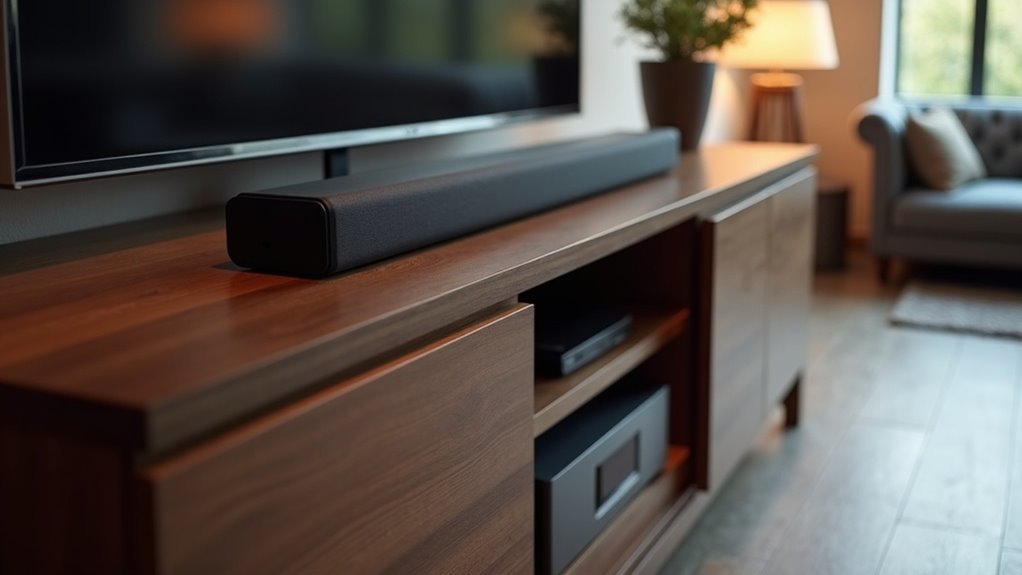
To place a soundbar in a cabinet, ensure it has at least 3 inches of space on all sides for ventilation. Choose open shelves or mesh doors to prevent sound muffling. Position the soundbar at or near ear height for optimal audio direction. Verify that the cabinet is wide and deep enough for the soundbar without any obstructions. Organized cable management will keep your setup looking tidy. For additional tips to enhance your sound experience, explore our resources on soundbars.
Key Takeaways
- Position the soundbar with at least 3 inches of space around it for optimal ventilation and performance.
- Use cabinets with open shelves or mesh doors to improve sound dispersion and reduce muffling.
- Place the soundbar at or near ear height to enhance audio direction and clarity.
- Ensure the cabinet is wide and deep enough to accommodate the soundbar without obstruction.
- Implement effective cable management solutions to keep the setup neat and accessible.
Pros and Cons of Placing a Soundbar in a Cabinet
When considering whether to place a soundbar in a cabinet, you’ll find both advantages and disadvantages that can greatly affect your audio experience.
While cabinets create a neat appearance, they can compromise sound quality by muffling audio and limiting projection. Insufficient ventilation may lead to overheating, potentially damaging your soundbar over time.
Additionally, obstructions from cabinet doors can disrupt remote signals, making control challenging without opening the doors.
To mitigate these issues, ensure your cabinet has at least 3 inches of space on all sides and adequate ventilation to maintain peak performance and safety for your soundbar.
How to Make a Cabinet Work for a Soundbar
If you’ve decided to place your soundbar in a cabinet, there are several strategies to maximize its performance while minimizing potential drawbacks. First, confirm your cabinet has at least 3 inches of ventilation space to prevent overheating. Consider designs with open shelves or mesh doors, as these can enhance audio clarity. To improve sound projection, use a soundbar mount or opt for a floating cabinet that keeps the soundbar at ear level. Additionally, maintaining organized cable management will help reduce clutter while ensuring easy access to connections.
| Feature | Importance |
|---|---|
| Ventilation Space | Prevents overheating |
| Open Shelves | Enhances audio clarity |
| Soundbar Mount | Maximizes sound projection |
| Cable Management | Reduces clutter |
| Easy Access | Simplifies setup and maintenance |
Ideal Placement Inside the Cabinet
To achieve ideal sound quality and performance from your soundbar, placing it inside a cabinet requires careful consideration of its positioning.
Ensure there’s at least 3 inches of ventilation space around the soundbar to prevent overheating. Choose cabinets with open shelves or mesh doors to reduce sound muffling.
Ensure at least 3 inches of ventilation around the soundbar and opt for cabinets with open shelves to minimize sound muffling.
Position the soundbar at or near ear height to enhance audio direction, avoiding lower shelves that may obstruct sound projection. Additionally, confirm that the cabinet has adequate width and depth for the soundbar and any additional equipment.
Finally, utilize cable management solutions to keep wires organized, ensuring a clean and safe setup for your soundbar.
Considerations for Sound Quality
While soundbars provide a remarkable audio enhancement, their placement significantly influences sound quality.
To ensure optimal sound clarity, position your soundbar with at least 3 inches of ventilation space on all sides. Avoid placing it in enclosed cabinets, as this can muffle sound and hinder clarity. Instead, opt for an open shelf for improved sound dispersion, allowing sound waves to project freely.
Glass shelves are particularly effective since they won’t obstruct sound waves or cause vibrations like solid wood. Additionally, always keep your soundbar away from heat sources to prevent overheating, ensuring it maintains performance without risking damage or compromised sound quality.
Aesthetic Integration and Design Tips
How can you seamlessly blend a soundbar into your living space? Start by choosing a cabinet design with open shelves or mesh doors that allow sound to project freely.
Ensure there’s at least 3 inches of space around the soundbar to prevent overheating and maintain sound quality.
Opt for cabinets that enhance aesthetic integration, such as those with sleek finishes or decorative elements that complement your decor.
Implement cable management solutions to keep the area tidy and visually appealing.
Finally, consider future-proofing by selecting wider cabinets to accommodate potential upgrades to your soundbar or additional audio equipment.
This approach guarantees both functionality and style, ensuring your soundbar is a seamless part of your overall aesthetic.