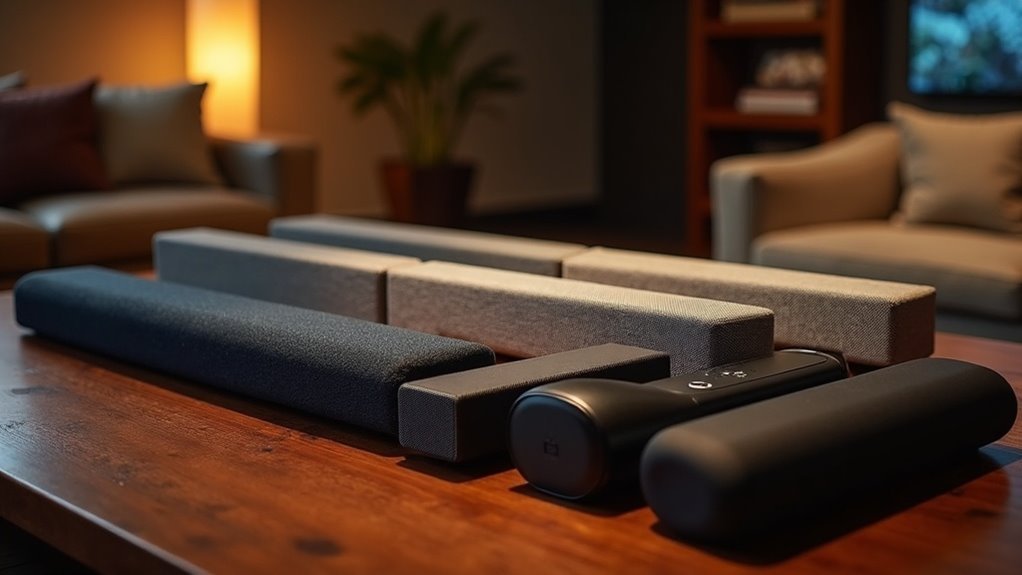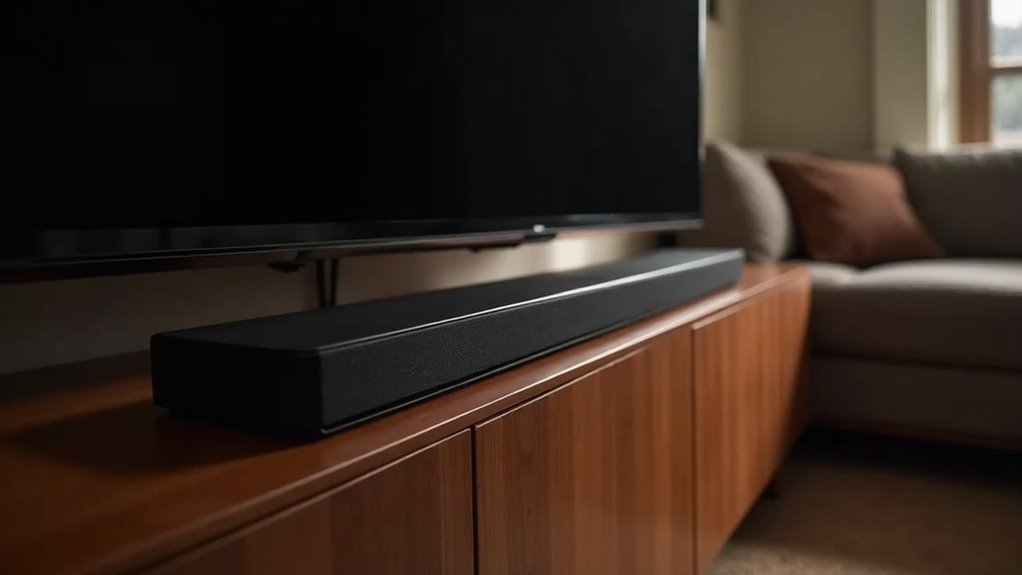
A soundbar can be used as a center channel, enhancing your audio experience with its compact design and immersive sound. However, its multi-channel setup may lead to muddled dialogue clarity and potential sound interference issues. While soundbars provide a convenient solution, dedicated center speakers generally outperform them in delivering clear, well-placed audio, especially for dialogue-heavy content. For those looking to optimize their audio performance, exploring the various features and options of soundbars can lead to a more satisfying listening experience.
Key Takeaways
- Soundbars can enhance dialogue but may not provide the same level of clarity as dedicated center channel speakers.
- Their multi-channel design can sometimes lead to muddled audio and sound interference, which may affect dialogue intelligibility.
- Dedicated center speakers are known for better sound placement and clarity, especially for dialogue-heavy content.
- However, soundbars offer a compact, user-friendly setup with minimal wiring, making them a great option for those with limited space.
- While soundbars can serve as a substitute, investing in dedicated speakers can significantly elevate the overall audio experience.
Understanding the Role of Center Channel Speakers
Soundbars play a pivotal role in enhancing the audio experience of your home entertainment system, primarily designed to deliver clear dialogue and immersive sound. Unlike traditional speakers, soundbars are typically compact and can produce stereo and virtual surround sound, ensuring ideal sound quality for vocal reproduction and effects.
By anchoring audio to the screen, these devices enhance your overall audio experience, providing clarity for dialogue and central sound effects without the need for multiple speakers. Many soundbars come with built-in amplifiers, making them convenient and easy to set up.
Additionally, some models allow for the integration of wireless subwoofers, further enriching the sound experience. Properly selecting a soundbar that matches your TV and viewing habits is essential for minimizing sound blending and preserving audio placement, which is key for an immersive sound experience in your home theater.
How Soundbars Function in Home Audio Systems
While many people appreciate the sleek design and simplicity of soundbars, understanding their function within a home audio system is vital for maximizing audio performance.
Soundbars typically feature multiple channels, often creating an illusion of surround sound rather than serving as a dedicated center channel for clear dialogue. They include a built-in amplifier, making them user-friendly compared to passive center channel speakers.
However, when used alongside surround sound speakers, soundbars can lead to sound blending, impairing clarity. Proper wiring is essential, as incorrect connections can risk damaging audio equipment due to double amplification, underscoring the need for careful integration.
For optimal performance, it’s important to consider the placement and configuration of your soundbar within your overall audio setup.
The Limitations of Using a Soundbar as a Center Channel
Using a soundbar as a center channel can significantly impact audio clarity and dialogue intelligibility.
While soundbars are designed for multi-channel audio, creating an illusion of surround sound, they often result in muddled audio when used as dedicated center speakers. You may experience destructive interference and “sound holes” when moving around the room, which can detract from your overall audio experience.
Moreover, soundbars typically produce stereo sound, making it challenging to isolate dialogue, a crucial function of center speakers. Without the precise sound placement that a dedicated center speaker offers, important dialogues may become difficult to hear, diminishing your immersive sound experience.
Audio Quality Concerns When Combining Soundbars With Other Speakers
When using a soundbar, it’s important to consider potential audio quality challenges that can arise when combining it with other speakers.
Sound interference may affect dialogue clarity, making it harder to hear speech clearly amidst the mix of sounds.
Moreover, compatibility issues with surround systems can amplify these concerns, as mismatched components may disrupt the intended audio experience.
To ensure optimal performance, it’s advisable to carefully select compatible components when integrating additional speakers with your soundbar.
Sound Interference Issues
Integrating a soundbar as a center channel speaker can introduce significant sound interference issues that compromise audio quality.
The soundbar’s multiple internal speakers may struggle to accurately reproduce a single center channel signal, resulting in muddiness. Additionally, interference with the left and right channels can lead to clarity loss for critical audio components.
While soundbars aim to create an immersive experience, this may diminish the distinctiveness of the center channel, causing quiet areas or sound “holes.”
Furthermore, improper connections can cause delays and synchronization issues, further degrading your overall audio quality and potentially putting your equipment at risk.
For the best audio experience, consider the compatibility and placement of your soundbar in the setup.
Dialogue Clarity Challenges
While soundbars offer a compact solution for audio needs, they often fall short in providing the clarity required for dialogue in a home theater environment.
Here are some important aspects to consider:
- Audio Interference: Soundbars tend to merge audio signals, which can diminish the clarity of dialogue.
- Phantom Center Issues: The design of soundbars, with side-facing speakers, may create gaps in sound that impact dialogue focus.
- Channel Sync Problems: If the audio channels aren’t synced properly, it can result in unclear sound and inconsistent dialogue.
- Single-Channel Limitation: Without a dedicated center speaker, soundbars may struggle to deliver clear and distinct dialogue.
Investing in a true center channel speaker can significantly improve your audio experience.
Compatibility With Surround Systems
Using a soundbar as part of a surround sound system can lead to significant audio quality issues.
Soundbars are typically designed for stereo output and aren’t tailored for the single channel role of a center speaker. This mismatch can create destructive interference and sound “holes,” especially as you move within the room.
When connected to a center receiver channel, an active soundbar can muddy dialogue clarity due to poor synchronization with dedicated speakers.
While soundbars enhance casual listening experiences, they often fall short in delivering the clarity and performance needed for an immersive surround system.
For the best results in a surround setup, consider prioritizing dedicated speakers alongside your soundbar for an optimal experience.
Ideal Alternatives to Soundbars for Center Channel Use
When exploring alternatives to soundbars for center channel use, dedicated speakers can significantly enhance audio clarity and precision, especially for dialogue in films. Here are some ideal options:
- Dedicated Center Channel Speakers: Models like the Polk TL3 and Yamaha NS-C310 are specifically designed to enhance audio clarity, making them excellent choices for dialogue-heavy content.
- Flat Panel Speakers: These speakers not only provide aesthetic appeal but also function effectively as center speakers in a surround sound setup, blending seamlessly with modern decor.
- On-Wall Center Speakers: Compact options from brands like Polk Audio, such as the VM20, offer quality audio performance while fitting neatly into smaller spaces.
- In-Wall Center Speakers: These speakers provide a discreet solution for those looking to maintain sound quality without compromising their home decor, allowing for a clean and minimalist look.
Wiring and Installation Challenges With Soundbars
Choosing a soundbar for your center channel can lead to various wiring and installation challenges that require careful consideration.
It’s essential to follow the correct wiring configurations to prevent damage; improper connections can result in issues like double amplification or hardware failure. Many soundbars have specific input requirements and may not integrate seamlessly with traditional surround sound receivers, often necessitating additional adapters.
Proper wiring configurations are crucial to prevent damage; improper connections can lead to double amplification or hardware failure.
It’s crucial to ensure that the impedance of the soundbar matches your receiver to avoid any performance issues.
Additionally, some soundbars come with built-in amplifiers, which can complicate installations by creating mismatched amplification levels.
Always consult the soundbar’s manual for safe and effective wiring instructions to ensure optimal performance and a hassle-free setup.
User Preferences: Why Some Choose Soundbars Over Traditional Speakers
As consumers seek efficient audio solutions, many find soundbars appealing due to their compact form and straightforward installation.
Here are four key reasons why soundbars are often favored over traditional speakers:
- Space Efficiency: Soundbars are designed to fit seamlessly into tight spaces, ensuring they don’t obstruct your TV placement.
- Cost-Effective: They present a more budget-friendly alternative to comprehensive surround sound systems, making high-quality audio accessible.
- Ease of Setup: With minimal wiring required, connecting a soundbar is straightforward, simplifying the overall setup process.
- Enhanced Clarity: Users frequently report improved dialogue clarity and sound quality, contributing to a more immersive audio experience.
For modern audio needs, choosing a soundbar can be a highly beneficial decision.
Expert Recommendations for Optimal Audio Setups
To achieve an ideal audio setup with soundbars, it’s essential to select models that excel in delivering clear dialogue and balanced sound. Consider investing in high-quality options like the Sonos Beam or the Samsung HW-Q950A. While soundbars can be convenient, their performance can be influenced by your room size—larger spaces may benefit from models with built-in subwoofers for a fuller sound. Ensure that your soundbar is compatible with your other audio equipment to avoid any potential issues. Don’t underestimate the importance of room acoustics; even soundbars can benefit from thoughtful placement and treatment to enhance sound quality. Experimenting with various configurations can help you achieve the best audio experience tailored to your preferences.
| Recommendation | Benefit |
|---|---|
| Quality Soundbar | Clear dialogue and balanced sound |
| Room Size Consideration | Enhanced audio performance |
| Compatibility Check | Avoids potential issues |
| Acoustic Treatment | Improved overall sound quality |
| Configuration Experimentation | Tailored audio experience |