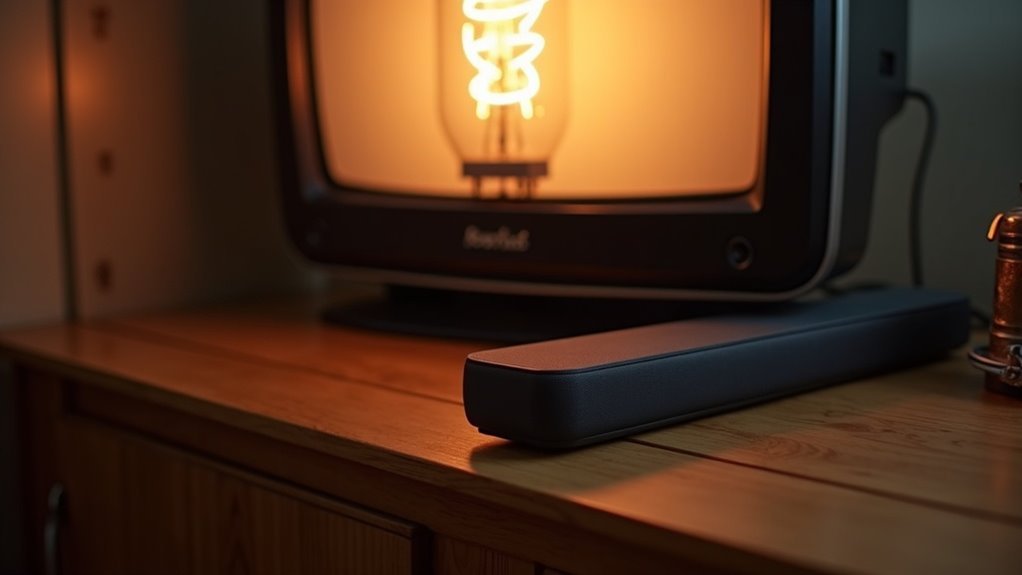
Yes, a soundbar can absolutely work with older TVs! You just need to check for compatible audio outputs like RCA or optical connections. Using the right cables, such as RCA-to-3.5mm or optical audio cables, can guarantee great sound quality. Don’t forget to adjust your TV audio settings to direct sound to the soundbar. With the right selection and setup, you’ll greatly enhance your audio experience. There’s plenty more to discover about making it all work seamlessly with your soundbar!
Key Takeaways
- Older TVs can connect to soundbars using analog RCA outputs, digital optical outputs, or 3.5mm headphone jacks.
- Ensure the soundbar has compatible inputs, such as optical or RCA, for seamless integration.
- Use appropriate cables like optical audio cables or RCA-to-3.5mm Y-cables for connection.
- Adjust TV audio settings to direct sound output to the soundbar and enable optimal sound quality.
- Troubleshoot connection issues by checking audio output options and disabling internal TV speakers if necessary.
Understanding Audio Outputs on Older TVs
When considering how to connect a soundbar to an older TV, it’s important to explore the available audio outputs. Most older TVs feature RCA audio outputs, marked with red and white ports, which allow for easy connections using RCA-to-3.5mm cables.
Many models also come equipped with a digital optical output, which offers superior sound quality through a squarish port with notches. While some TVs may include a headphone jack, this option can sometimes limit audio quality.
To ensure the best performance, always check your TV’s audio settings to enable the correct output, and verify that your soundbar is compatible with either optical or RCA inputs for a seamless connection.
Selecting the Right Soundbar
When selecting a soundbar for your older TV, ensure it has compatible audio inputs such as optical, RCA, or 3.5mm analog.
Look for models that offer virtual surround sound features to enhance your audio experience, particularly if your TV’s output options are limited.
Always check the specifications to confirm the soundbar will integrate seamlessly with your setup, providing the best possible sound quality.
Match Audio Inputs
How can you ensure your soundbar integrates effortlessly with an older TV? Start by checking that the soundbar includes compatible audio inputs such as optical, RCA, or 3.5mm analog.
If your TV is equipped with an SPDIF connection, using an optical audio port can provide high-quality sound.
Many affordable soundbars priced under $200 often feature a 3.5mm audio jack, which allows for straightforward RCA connections through the red and white ports on older TVs.
Always review the specifications and input options of the soundbar prior to purchase. This ensures a smooth audio experience and compatibility with your older TV’s audio output.
Consider Surround Sound Features
Choosing a soundbar with surround sound features can dramatically enhance your audio experience, especially when paired with an older TV.
Look for models that provide virtual surround sound, such as DTS Virtual:X, to elevate your listening.
Here are key features to evaluate when selecting a soundbar:
- Compatibility with optical and 3.5mm inputs for versatile connectivity
- Built-in subwoofers that deliver rich low-frequency sounds
- Affordable options available under $200 for budget-conscious buyers
- Virtualized 3D sound modes that create immersive audio experiences
- Enhanced audio perception for improving sound quality from limited stereo sources
Investing in a soundbar with these features can significantly transform your home entertainment setup.
Importance of Virtualized Sound Modes
Virtualized sound modes are game-changers for enhancing your audio experience, especially when paired with soundbars.
These advanced features, such as DTS Virtual:X, simulate surround sound effects that bring your movies and games to life. By creating audio that seems to emanate from all directions, they compensate for older TVs that may lack sophisticated surround sound options.
Fortunately, many budget-friendly soundbars under $200 come equipped with these capabilities, offering a significant quality boost without straining your wallet.
With improved audio clarity and depth, virtualized sound modes transform your listening experience, ensuring you enjoy rich, immersive sound that standard TV speakers simply can’t deliver.
Cables You Will Need for Connection
To connect your soundbar to an older TV, you’ll need the appropriate cables, such as optical audio cables or RCA-to-3.5mm Y-cables.
It’s also important to consider the length of the cables to ensure they can reach from your TV to the soundbar without any strain.
Selecting the correct type and length of cable will enhance your audio experience, allowing you to enjoy superior sound quality from your soundbar.
Necessary Cable Types
Connecting a soundbar to an older TV requires a few specific cables to ensure optimal audio performance. Depending on your TV’s outputs, you may need:
- Optical audio cable (for digital optical output)
- RCA-to-3.5mm Y-cables (if using AUX input)
- Standard RCA audio cable (with red and white connectors)
- Bluetooth connection (if both devices support it)
- Compatible cables (confirm they match your TV and soundbar)
Always double-check compatibility to ensure superior audio quality and avoid any potential safety hazards.
With the right cables, you’ll enjoy an enhanced audio experience with your soundbar!
Cable Length Considerations
When setting up your soundbar with an older TV, cable length is just as important as the type of cables you select. Depending on your specific setup, you’ll likely need an optical audio cable or an RCA-to-3.5mm Y-cable.
Ensure your cables range from 6 to 25 feet to provide enough slack, which helps prevent stress and potential damage. If your TV lacks sufficient audio output options, consider using a signal booster for longer distances.
Always check your cables for any signs of wear, as degraded cables can negatively impact audio quality. With the right cable type and length, you can seamlessly connect your new soundbar to an older TV.
Adjusting TV Audio Settings
As you set up your soundbar with an older TV, adjusting the audio settings is essential for peak performance. Here’s what to do to enhance your soundbar experience:
- Ensure that the audio output is directed to external devices to utilize your soundbar effectively.
- Toggle between fixed and variable audio output settings to control the volume according to your preference.
- Activate the dedicated audio-out setting for optical or RCA connections to ensure optimal sound quality.
- Optimize compatibility by selecting “PCM” or “Bitstream” in your TV’s audio settings to make the most of your soundbar’s capabilities.
- Always consult your TV’s manual for specific instructions tailored to your model for seamless integration with your soundbar.
Compatibility With Various Soundbar Models
While older TVs may lack the latest connectivity options, many soundbars still offer compatibility, allowing you to enhance your audio experience.
Check your TV’s audio output; if it has an optical or RCA output, you’re in luck! Optical ports support high-quality sound formats, while RCA inputs and 3.5mm analog inputs are common on budget soundbars under $200, ensuring compatibility with older models.
When selecting a soundbar, always verify its specifications to confirm it supports the connection types available on your TV. This way, you can enjoy crisp, immersive sound without the hassle of complex setups.
Troubleshooting Common Connection Issues
Even with the right connections, you might run into some common issues when setting up your soundbar with an older TV.
Here’s a quick troubleshooting guide:
- Confirm your TV has the correct audio output options (optical or RCA) suitable for connecting to a soundbar.
- For optical connections, check that the output is enabled in your TV’s settings to ensure proper audio transmission to the soundbar.
- Use a 75-ohm RCA cable and connect the red and white outputs properly to achieve optimal sound quality from your soundbar.
- Disable the TV’s internal speakers in the audio menu to prevent audio conflicts with your soundbar.
- Restart both the TV and soundbar after making changes to refresh settings and ensure everything is functioning correctly.
Following these steps should help resolve any audio issues you encounter with your soundbar setup.
Enhancing Your Audio Experience
To truly enhance your audio experience with a soundbar and an older TV, it’s crucial to utilize the available audio outputs effectively.
Many older TVs come equipped with analog stereo RCA outputs, which allow for a straightforward connection to your soundbar using RCA-to-3.5mm cables. If your TV includes an optical audio output, you can take advantage of advanced sound formats that provide superior audio quality.
Consider investing in soundbars that feature virtual surround sound technology, such as DTS Virtual:X, to elevate the audio from standard stereo sources.
Additionally, make sure to adjust your TV’s audio settings by switching from fixed to variable output, ensuring your soundbar performs optimally for an immersive audio experience.