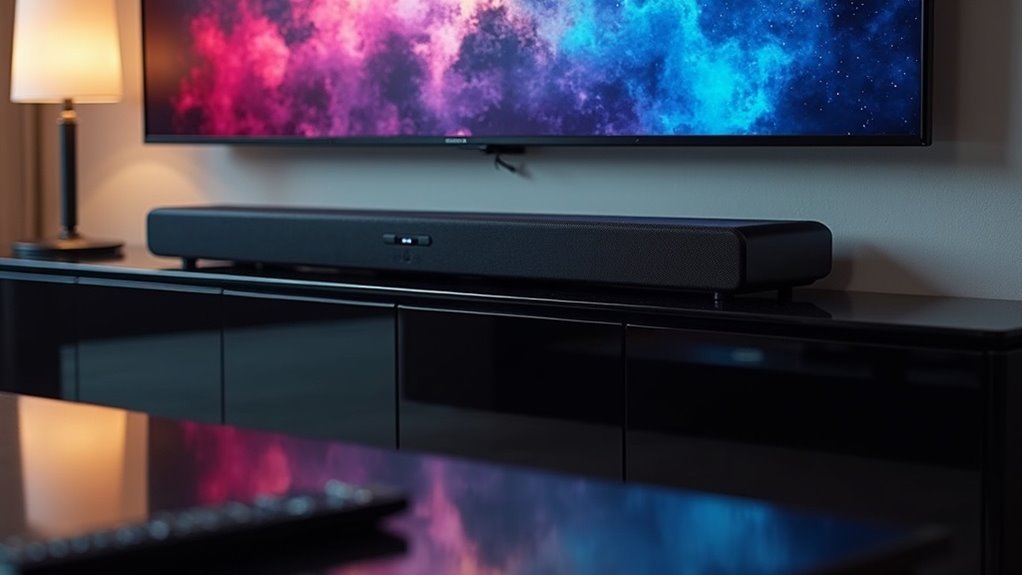
To use a soundbar with your digital signage display, connect using either an optical cable or HDMI. For an optical connection, plug the cable from the display’s optical output to the soundbar’s input, and set audio settings to PCM for optimal sound quality. If using HDMI, be sure to choose the HDMI ARC port for two-way audio functionality. Alternatively, you can easily pair your soundbar via Bluetooth by putting the soundbar in pairing mode and selecting it in your display’s Bluetooth settings. For best results, explore troubleshooting tips to enhance your audio experience with the soundbar.
Key Takeaways
- Connect the soundbar to the digital signage display using an optical cable for optimal sound quality.
- Ensure that the display’s audio settings are set to PCM to prevent any audio issues.
- If available, use HDMI ARC to enable two-way audio communication between the soundbar and the display for enhanced functionality.
- When using Bluetooth, make sure to place the soundbar within 30 feet of the display to avoid connectivity problems.
- To troubleshoot any audio issues, check all connections and volume levels on both the soundbar and the display.
Understanding Soundbar Connections
When setting up a soundbar, it’s essential to understand the various connection options available for optimal audio performance. One effective way to connect your soundbar is through an optical cable, which provides excellent sound quality.
Ensure that you connect it to the optical output of your display device. Keep in mind that many soundbars come with only one optical input, so if you have multiple devices, you might want to consider using an optical switch.
Additionally, check the audio settings on your display; setting it to PCM can help prevent any audio issues. While HDMI connections are often simpler, this guide focuses on maximizing your optical connection for the best sound experience with your soundbar.
HDMI Connection Method
Connecting your soundbar to a digital signage display via HDMI is a straightforward yet effective method for achieving high-quality audio.
First, verify that both your soundbar and display have HDMI ports. If your display supports HDMI ARC (Audio Return Channel), connect the soundbar’s HDMI ARC input to the display’s HDMI ARC output for seamless two-way audio communication. If your display doesn’t support ARC, simply connect the soundbar to any available HDMI port.
Ensure both your soundbar and display have HDMI ports, and connect via HDMI ARC for optimal audio performance.
Next, configure the display’s audio settings to ensure sound is output through the HDMI connection.
Finally, check if your soundbar supports audio formats like Dolby Digital or DTS, and adjust the settings accordingly to achieve the best audio quality.
Optical Cable Connection Method
Using an optical cable is an excellent way to connect your soundbar to a digital signage display, ensuring clear and high-fidelity audio performance.
Start by plugging one end of the optical cable into the display’s optical output port and the other end into the soundbar’s optical input.
Next, configure the display’s audio output settings to use the optical output by setting Digital Audio Out to PCM for optimal compatibility.
Select the appropriate input on the soundbar, usually labeled “Optical.”
It’s important to keep volume levels balanced on both devices to prevent distortion and achieve the best sound quality.
If you encounter any issues, check the integrity of the cable and consider testing with another optical cable if necessary.
Enjoy the enhanced audio experience your soundbar provides!
Bluetooth Pairing Process
Pairing a soundbar with your digital signage display via Bluetooth is a straightforward process that enhances audio delivery.
To get started, ensure your soundbar is in pairing mode by holding the Bluetooth button until the indicator blinks. Then, navigate to the Bluetooth settings on your display and search for available devices. Once you see your soundbar, select it to initiate pairing, confirming any codes if prompted.
Ensure your soundbar is in pairing mode, then search for it in your display’s Bluetooth settings to connect.
Finally, adjust the audio output settings to use the soundbar for optimal sound quality.
For ideal performance:
- Keep the soundbar within 30 feet of the display.
- Avoid interference from multiple devices.
- Check that the soundbar’s battery levels are sufficient.
- Regularly update the soundbar’s firmware.
- Restart the soundbar and display if needed to resolve connectivity issues.
Troubleshooting Common Issues
Even with a successful Bluetooth pairing, you might encounter some common issues when using your soundbar with a digital signage display.
First, ensure that the audio output settings on your Smart TV are configured to PCM to avoid compatibility issues.
Check that all connections, whether optical or HDMI, are secure to prevent audio dropouts.
If you experience low or no sound, verify the volume levels on both the soundbar and the Smart TV, making sure that neither is muted.
Lastly, test the soundbar with various audio sources to determine if the issue is with the soundbar itself or the display.