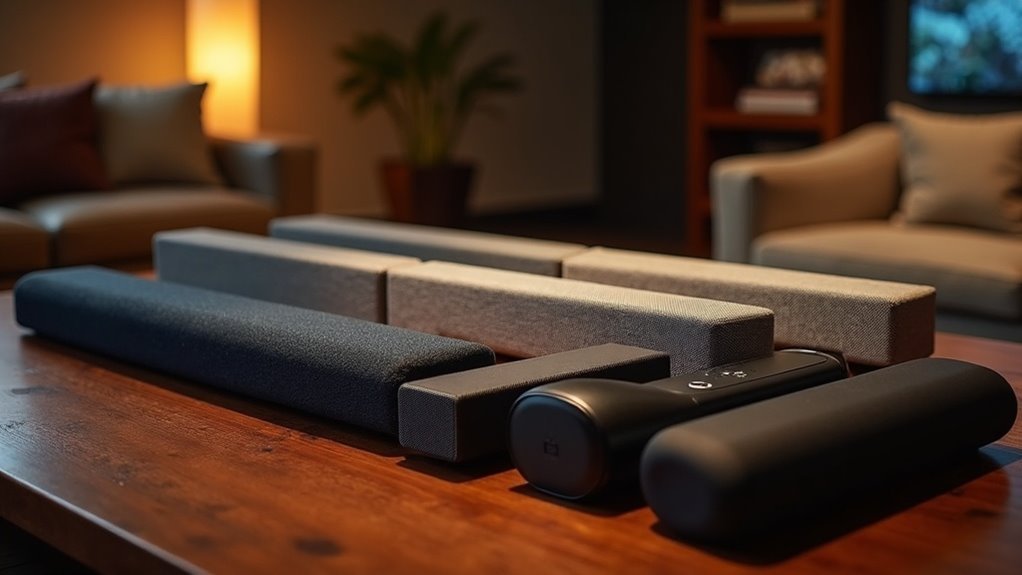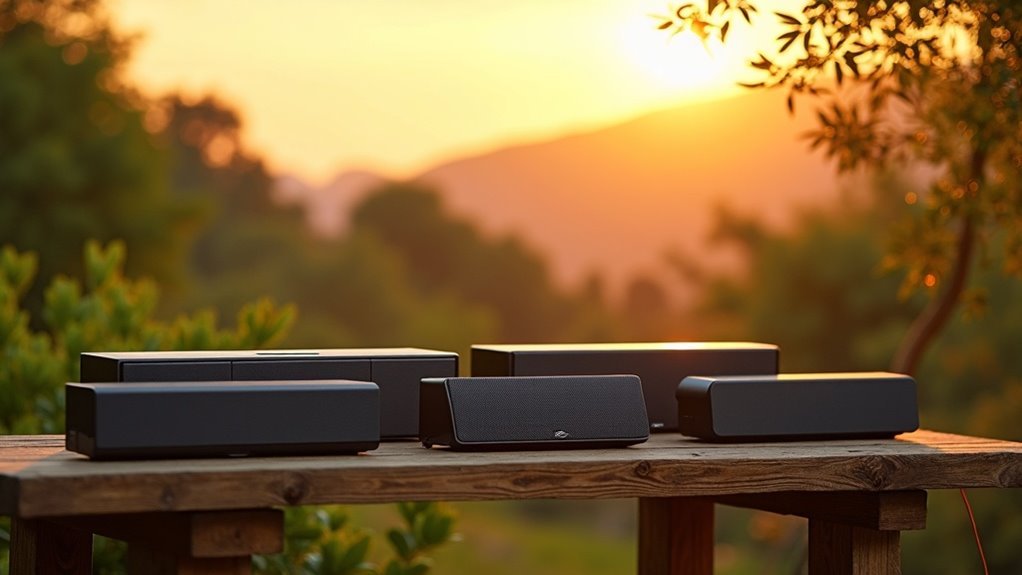
To keep your soundbar cool and efficient, consider these top thermal sensors specifically designed for audio equipment:
- LM393 Sound Sensor Module
- HiLetgo AHT21 Digital Temperature and Humidity Sensor
- Bayite NTC 10K Temperature Controller Probe
- HiLetgo 5pcs NTC Temperature Sensors
- TempTouch WiFi Pipe Clamp Sensor
- TWTADE 10K Thermistor Sensors
- HiLetgo 3D Printer NTC Sensors.
Each offers unique features for accurate temperature management tailored to your soundbar setup.
Curious about how to select the right sensor for your audio equipment? You’ll find more helpful tips ahead.
LM393 Sound Sensor Module (Pack of 5)

If you’re looking to enhance your audio experience, a high-quality soundbar is an excellent choice for you. Soundbars provide powerful audio output and can significantly improve your home theater setup or music listening experience. They are designed to deliver immersive sound with minimal clutter, making them perfect for small spaces or modern living rooms. Most soundbars operate on standard AC power and often come with features like Bluetooth connectivity and built-in subwoofers for added bass. With a variety of models available, you’ll find the perfect soundbar to suit your needs. Just plug it in, set it up with your TV or device, and enjoy a superior sound experience!
Best For: Anyone looking to elevate their audio experience, including home theater enthusiasts and casual listeners.
Pros:
- Compact Design: Sleek and space-saving, ideal for various room sizes.
- Enhanced Audio Quality: Provides richer sound compared to standard TV speakers.
- User-Friendly Setup: Typically easy to install with simple connectivity options.
Cons:
- Soundstage Limitations: May not replicate the immersive soundstage of a full surround sound system.
- Varying Audio Quality: Sound quality can differ significantly between models and brands.
- Limited Customization: Some soundbars may lack advanced audio settings or equalizers that audiophiles desire.
HiLetgo AHT21 Digital Temperature and Humidity Sensor Module (2pcs)
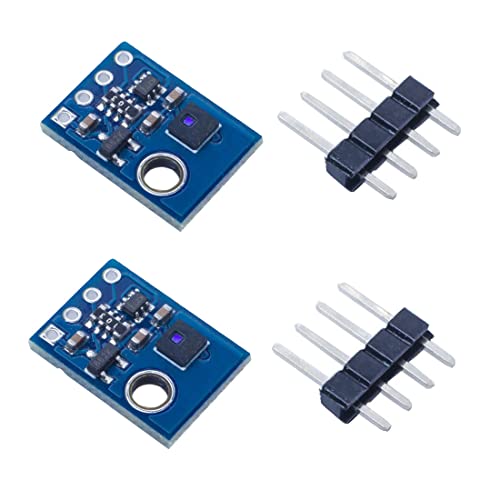
The HiLetgo AHT21 Digital Temperature and Humidity Sensor Module is a versatile tool for audio enthusiasts who need accurate environmental measurements to enhance their soundbar setups. With a humidity range of 0-100% RH and temperature range of -40 to +85°C, you can rely on its accuracy of ±0.3°C and ±2% humidity, ensuring optimal conditions for your audio equipment. This compact module (16*11 mm) operates on 1.8-6.0 V and utilizes I2C for easy integration, making it suitable for various audio projects. While many users find it effective, some report connectivity or accuracy issues. Proper calibration and connection verification are recommended for the best performance with your soundbars.
Best For: Audio enthusiasts and hobbyists seeking precise environmental measurements to optimize their soundbar performance.
Pros:
- Compact size (16*11 mm) facilitates easy integration into soundbar projects.
- High measurement accuracy with ±0.3°C for temperature and ±2% for humidity.
- Operates efficiently within a wide voltage range of 1.8-6.0 V, suitable for various audio applications.
Cons:
- Some users experience connectivity issues with the I2C interface.
- Reports of inconsistent accuracy, with errors potentially reaching ±7°C for temperature.
- Concerns over quality, including poor solder joint quality and inadequate pre-distribution testing, which may affect performance in audio setups.
Bayite NTC 10K Temperature Controller Probe Sensor

For those seeking enhanced audio experiences, the Bayite NTC 10K Temperature Controller Probe Sensor stands out with its impressive compatibility and ease of use. With a 9.8ft cable and a 3.5mm audio plug, it pairs seamlessly with bayite BTC 201/BTC 211 and Willhi WH1436A controllers. You can measure temperatures from -58 to 230°F, making it versatile for applications like water heaters and sous vide setups. While some users report durability issues, Bayite’s customer service quickly resolves defects. Overall, it’s a solid choice for those who need dependable temperature readings in various environments.
Best For: Those looking for a reliable temperature sensor for applications such as audio equipment cooling, sous vide cooking, and laboratory monitoring.
Pros:
- Compatible with popular temperature controllers like bayite BTC 201/BTC 211 and Willhi WH1436A.
- Wide measuring temperature range from -58 to 230°F, suitable for various environments.
- Quick customer service response for resolving defective units.
Cons:
- Mixed reviews on build quality, with some customers noting fragility.
- Potential corrosion issues when used in deionized water applications.
- Some sensors may fail after a few months of use, necessitating replacements.
HiLetgo 5pcs NTC Temperature Sensor 100K
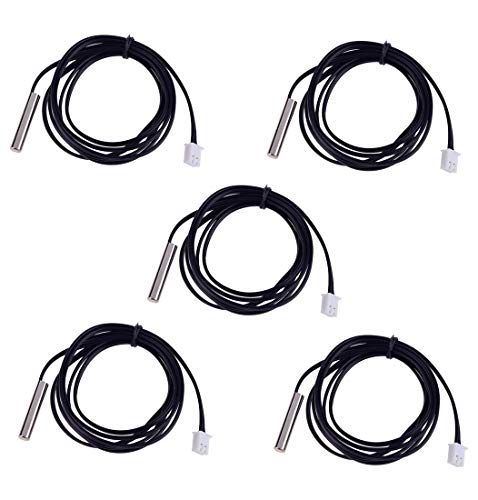
Designed with a waterproof probe and a stainless steel sheath, the HiLetgo 5pcs NTC Temperature Sensor 100K is ideal for those seeking reliable temperature measurements for their soundbar systems. With a measurement range of -20 to 105 °C, it’s perfect for monitoring the heat levels of your soundbar to ensure optimal performance. The 1-meter wire length makes installation easy within your audio setup, while its compatibility with Arduino ADC enhances versatility for DIY enthusiasts. Just keep in mind that some users have reported inaccuracies around 50 degrees Celsius, which could impact the monitoring of your soundbar’s temperature. Overall, it’s a solid choice for maintaining ideal temperatures in your audio equipment, particularly when precision is crucial for sound quality.
Best For: Soundbar owners looking for a reliable temperature sensor for monitoring heat levels, especially those engaged in Arduino projects.
Pros:
- Waterproof design with a stainless steel sheath ensures durability and reliability in various audio environments.
- Compatible with Arduino ADC, making it easy to integrate into DIY soundbar projects.
- Measurement range of -20 to 105 °C allows for versatile applications in monitoring soundbar temperatures.
Cons:
- Some users have reported inaccuracies around 50 degrees Celsius, which may affect data reliability for soundbar temperature monitoring.
- The barrel size may not fit standard soundbar components, limiting its compatibility with certain setups.
- Limited feedback on performance at extreme temperature ranges may raise concerns for critical audio applications.
TempTouch WiFi Pipe Clamp Temperature & Humidity Sensor

Ideal for homeowners and property managers, the TempTouch WiFi Pipe Clamp Temperature & Humidity Sensor provides continuous monitoring of pipe temperatures, ensuring you receive real-time alerts to prevent freezing. It sends instant notifications via text, email, or app when temperatures drop, perfect for those remote spots like basements or vacation homes. With up to a year of battery life from 3 AA lithium batteries, you won’t have to worry about frequent replacements. Plus, it logs data locally during WiFi outages, so you’re always informed. Setup’s a breeze, making it a smart choice for effective temperature management.
Best For: Homeowners and property managers looking for a reliable solution to monitor and prevent pipe freezing in challenging environments.
Pros:
- Real-time alerts via text, email, and app for immediate temperature drops.
- Long battery life of up to a year with 3 AA lithium batteries, reducing maintenance.
- Local data logging during WiFi outages ensures continuous monitoring.
Cons:
- Limited to 2.4GHz WiFi networks, which may not suit all setups.
- Requires proper installation with velcro strap or adhesive mount.
- May not be suitable for areas with high humidity levels due to potential sensor limitations.
TWTADE 2 Pcs 10K Thermistor Temperature Sensor

The TWTADE 2 Pcs 10K Thermistor Temperature Sensor is an excellent choice for maintaining optimal performance of your soundbar systems. With its impressive sensitivity, this sensor provides precise temperature readings, ensuring that your audio equipment remains cool and operates efficiently. It boasts a measuring range from -25°C to 125°C, making it suitable for monitoring temperature in various setups, including home theaters and entertainment centers. The 3-meter length and robust stainless steel housing enhance both durability and ease of installation. Additionally, the two-year warranty and a replacement policy for quality issues guarantee a secure investment in your sound system’s longevity.
Best For: Audiophiles and home theater enthusiasts seeking reliable temperature monitoring for their soundbar systems and related equipment.
Pros:
- High sensitivity ensures accurate temperature readings, enhancing the performance of your soundbar.
- Durable stainless steel housing adds longevity and reliability, making it ideal for electronic environments.
- Two-year warranty offers peace of mind, including a free replacement policy for any quality concerns.
Cons:
- Limited to a specific temperature range (-25°C to 125°C), which may not suit extreme environmental conditions.
- Length of 3 meters might be excessive for some setups, leading to potential cable management issues.
- NTC type may not be compatible with all soundbar temperature monitoring systems, possibly requiring additional components for integration.
HiLetgo 10pcs 3D Printer NTC 3950 Thermistors Sensors

For audio enthusiasts seeking exceptional sound quality, the HiLetgo 10pcs 3D Printer NTC 3950 Thermistors Sensors may not be the right fit, as they are designed for temperature monitoring in 3D printing rather than enhancing audio systems. However, if you’re looking for precision in your sound setup, consider investing in a soundbar that offers reliable performance and impressive sound accuracy. Many modern soundbars come equipped with advanced technology that ensures clear sound reproduction and easy installation. It’s always a good idea to keep spare accessories handy to maintain optimal performance in your home theater system.
Best For: Audio enthusiasts who need reliable and accurate sound performance for their entertainment systems.
Pros:
- High-quality sound reproduction for immersive audio experiences.
- Easy to set up and integrate with existing home theater systems, offering flexibility in use.
- Compatible with various audio devices, enhancing versatility.
Cons:
- Performance may vary based on room acoustics and speaker placement, leading to potential inconsistencies.
- Some soundbars may require additional components for full functionality, complicating setup for some users.
- Periodic upgrades may be necessary to keep up with the latest audio technology trends.
Factors to Consider When Choosing Soundbar Thermal Sensors
When selecting thermal sensors for soundbars, it’s essential to consider several key factors. The measurement range, accuracy, and compatibility with various sensor types can significantly influence the overall performance of the soundbar. Additionally, it’s important to evaluate the environmental durability of the sensors and their power supply requirements to ensure they align with your soundbar’s operational needs.
Measurement Range Specifications
Choosing the right thermal sensor for your soundbar is crucial for effective thermal management. Understanding the measurement range specifications of these sensors is key, as they define the minimum and maximum temperatures that can be accurately monitored. This ensures reliable performance of your soundbar. Common temperature ranges for thermal sensors can vary significantly, with some capable of measuring as low as -40°C and as high as +85°C. It’s also important to consider the sensor’s sensitivity within this range; for example, a sensor might offer a typical accuracy of ±0.3 °C. Additionally, pay attention to the typical dissipation constant, which affects how quickly the sensor responds to temperature fluctuations. By selecting a thermal sensor with a suitable measurement range, you can enhance the performance and longevity of your soundbar.
Accuracy and Resolution
When selecting thermal sensors for your soundbar, accuracy and resolution are two essential factors that cannot be overlooked. Accuracy indicates how closely a sensor’s readings match the true temperature, with high-precision sensors offering tolerances of ±0.3°C or better. Resolution refers to the smallest temperature change a sensor can detect, with high-resolution sensors providing readings in increments as fine as 0.01°C. NTC thermistors are often an excellent choice due to their high degree of accuracy and resolution, making them ideal for precise temperature monitoring in soundbars. Additionally, it’s important to consider the temperature range a sensor can effectively measure, as this impacts its overall performance within your soundbar. Regular calibration and environmental factors also play a crucial role in maintaining sensor accuracy and resolution over time, ensuring optimal performance for your audio experience.
Sensor Type Compatibility
Selecting the right thermal sensor for your soundbar involves understanding how different types interact with your existing temperature control systems. Consider sensors like NTC or thermistor sensors, as they provide accurate readings vital for maintaining peak performance in your soundbar. Confirm that the sensor’s operating temperature range matches your soundbar’s thermal environment, ideally from -40°C to +85°C. Evaluate the output characteristics, whether analog or digital, to ensure compatibility with your soundbar’s microcontroller. Don’t overlook the sensor’s response time and accuracy; typical sensors offer accuracies of ±0.3 °C or ±1%, which is essential for optimal soundbar performance. Finally, check the installation requirements, including size and wiring length, to verify that the sensor fits seamlessly within your soundbar’s design without compromising audio quality.
Environmental Durability
When it comes to soundbars, environmental durability is essential for ensuring reliable performance in various settings. You should look for soundbars that can handle temperature fluctuations and humidity levels typical of both indoor and outdoor environments. A wider temperature operating range, like -40°C to +85°C, is ideal for extreme conditions. Waterproof materials and designs can greatly enhance the soundbar’s longevity in wet environments. Additionally, choose soundbars that resist corrosion and degradation from harsh chemicals to maintain audio quality over time. Finally, robust build quality, such as stainless steel housings, improves resistance to physical damage and environmental stressors, ensuring your soundbar performs well under any circumstances.
Power Supply Requirements
Understanding power supply requirements is essential for ensuring that your soundbar operates effectively and efficiently. Most thermal sensors integrated within soundbars require a power supply that operates within a voltage range of 3.3 to 5V. It’s critical to verify that the power supply provides stable voltage and current to avoid malfunction or inaccurate readings, which could impact your audio experience. Check each thermal sensor’s specific power consumption ratings to confirm compatibility with your soundbar’s power system. Additionally, consider how the power supply is managed—whether it’s drawn directly from the soundbar or supplied through an external source. Proper power supply management is fundamental for maintaining the performance and longevity of your thermal sensors, allowing your soundbar to deliver optimal audio quality while preventing overheating.
Installation and Setup
Power supply management is crucial for the successful installation and setup of thermal sensors in soundbars. First, ensure that the thermal sensor you select has a compatible interface type, such as I2C or analog output, to facilitate seamless integration with your soundbar system. Next, check the sensor’s working voltage to confirm it matches your soundbar’s power supply, which typically ranges between 3.3V and 5V. It’s also important to consider the sensor’s measurement range to effectively monitor temperature fluctuations during operation. If your soundbar will be placed in a damp or dusty environment, look for a sensor that features waterproof or durable housing. Lastly, take the time to read user reviews for insights on the installation process and any necessary calibration steps for achieving accurate temperature readings.
Communication Interface Options
Choosing the right communication interface for your soundbar’s thermal sensors can significantly impact their performance and integration ease. Common options include I2C, allowing multiple devices to share just two wires, and PWM (Pulse Width Modulation), which conveys temperature readings through varying duty cycles. For faster data transfers suitable for real-time monitoring, consider SPI (Serial Peripheral Interface), although it typically requires more microcontroller pins and complex wiring compared to I2C. Additionally, some sensors provide an analog output, offering a continuous voltage signal proportional to temperature, which can be read by analog-to-digital converters (ADCs). Be sure to consider compatibility with your existing soundbar systems and the availability of libraries to ensure seamless integration.
Calibration and Maintenance
While selecting soundbar thermal sensors, calibration and maintenance play a crucial role in ensuring accurate temperature readings and longevity. It is important to calibrate your sensors by placing them in specific conditions for a set period before use. Regular maintenance checks are essential; always verify connections and sensor integrity to prevent inaccuracies and extend their lifespan. Be mindful of environmental changes, such as humidity or extreme temperatures, as these can impact performance. It is advisable to have a reliable thermometer on hand for periodically cross-checking your thermal sensors’ readings. Additionally, document your calibration procedures and maintenance schedules to maintain consistent performance over time. By taking these steps, you ensure your soundbar operates efficiently and remains cool, enhancing your overall audio experience.