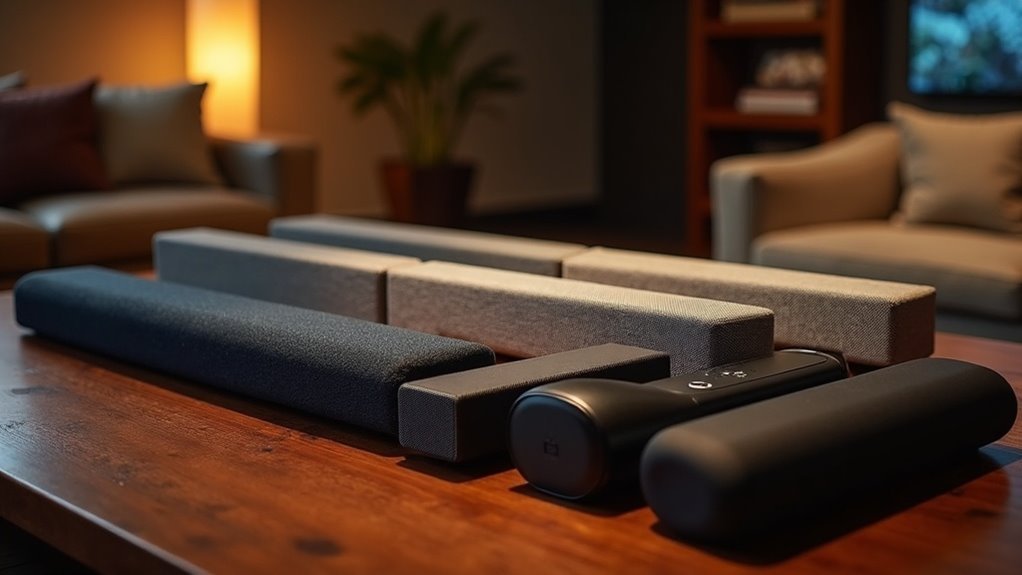
Yes, some soundbars can be powered by USB, particularly smaller, portable models designed for specific use cases. However, standard home theater soundbars typically require more robust power sources, as USB ports generally provide only 5 volts, which is insufficient for larger systems. It’s important to note that USB ports mainly serve for firmware updates or music playback, rather than audio transmission. If you’re interested in exploring the best options for connectivity and setup with soundbars, there’s more information available ahead.
Key Takeaways
- Some portable soundbars can be powered solely by USB, allowing for flexible placement without the need for AC outlets.
- USB ports typically provide 5 volts of power, which is often insufficient for larger soundbars that require more power.
- It’s essential to verify compatibility with USB power in the soundbar’s specifications to ensure effective use.
- While USB connections primarily serve as power sources, they usually do not support audio transmission.
- For audio connectivity, alternatives such as HDMI ARC or optical cables are recommended over USB for optimal sound quality.
Understanding USB Functionality in Soundbars
While you might think USB ports on soundbars serve multiple purposes, they mainly facilitate firmware updates and music playback from USB drives rather than connecting audio from a TV.
Some portable soundbars can draw USB power from compatible devices, but this doesn’t support audio transmission. Not all soundbars are equipped with USB audio functionality; those that are often require specific connections for sound.
Generally, USB connections aren’t a common method for linking soundbars to TVs, with HDMI ARC, optical cables, and Bluetooth being safer and more reliable alternatives.
Always check compatibility with your soundbar model and source device for optimal performance.
The Role of USB for Power Supply
USB connections play a significant role in powering soundbars, especially in portable or compact models designed for use with computers and laptops.
Here’s what you need to know about USB power supply for soundbars:
- USB ports typically provide 5 volts of power, which may not be sufficient for larger soundbars.
- Some soundbars are specifically designed to operate solely on USB power, making them ideal for on-the-go use.
- Utilizing USB power simplifies setup, eliminating the need for traditional AC outlets and allowing for more flexible placement.
- Always check your soundbar’s specifications to verify compatibility with USB power to ensure optimal performance.
Understanding these aspects guarantees safe and effective use of your soundbar.
Limitations of USB for Audio Connectivity
When considering soundbars, it’s important to recognize that USB primarily serves as a power source rather than a reliable audio transfer method.
Most soundbars don’t support USB audio functionality, which can limit compatibility across different models.
For effective audio playback, you’ll typically need to explore alternative connections like HDMI ARC or optical cables to ensure the best audio experience.
Power vs. Audio Transfer
While many users believe that USB can manage both power and audio, its primary function in soundbars is largely confined to providing power or enabling firmware updates.
Here are some important limitations of USB for audio transfer in soundbars:
- USB cables are mainly used to deliver power, not for audio input.
- Most conventional soundbars don’t support audio input via USB.
- For audio transmission, HDMI ARC, optical cables, or Bluetooth are typically required.
- Ensuring compatibility between soundbars and source devices is crucial for proper audio functionality.
By understanding these limitations, you can set up your sound system efficiently and safely, helping to prevent potential connectivity issues.
Always verify your equipment’s specifications before making connections.
Compatibility Limitations Across Models
While many soundbars come equipped with USB ports, their functionality often falls short when it comes to audio connectivity.
Most soundbars use these ports primarily for firmware updates or to play music from USB drives, not for direct audio input from TVs. Even if your soundbar has a USB port, it might only provide power to compatible devices, limiting its audio capabilities.
Compatibility issues arise since not all soundbars support USB audio, and some may require specific formats. Always consult your soundbar’s user manual to confirm the intended use of USB ports, ensuring you avoid potential connectivity pitfalls when setting up your soundbar system.
Alternatives to USB for Connecting Soundbars
When connecting your soundbar, consider using HDMI ARC for superior audio quality and seamless control with a single remote.
Alternatively, optical cables provide a reliable, lossless connection that minimizes interference for clear sound.
Both options ensure you achieve the best audio performance without the need for USB.
HDMI ARC Connection
One of the most effective alternatives to USB for connecting soundbars is HDMI ARC (Audio Return Channel). Here’s why you should consider using HDMI ARC for your soundbar setup:
- Simplicity: A single HDMI cable transmits both audio and video signals, making your soundbar connection effortless.
- High-Quality Audio: Supports advanced audio formats such as Dolby Digital and DTS, enhancing your soundbar’s performance for a richer audio experience.
- Convenience: Control both your TV and soundbar with one remote, simplifying your entertainment setup.
- Real-Time Transmission: Eliminates latency, ensuring that audio is synchronized with video for streaming and live content.
With many modern TVs and soundbars featuring HDMI ARC or eARC, this connection method is a superior choice for achieving a seamless audio experience with your soundbar.
Optical Cable Options
If you’re looking for a reliable alternative to USB for connecting your soundbar, consider using an optical cable.
Optical cables provide a high-quality digital audio connection, ensuring your soundbar receives audio signals without any loss in sound quality. Make sure both your TV and soundbar have optical audio ports, labeled as “TOSLINK” or “Optical Out.”
These cables transmit audio as light, reducing interference from electrical noise and delivering clearer sound. Many soundbars support Dolby Digital and DTS formats through optical connections, offering an immersive audio experience.
Installation is straightforward with a simple plug-and-play setup, making optical cables a convenient choice for enhancing your soundbar’s performance.
Choosing the Right USB Cable for Your Setup
How can you ensure your soundbar is optimized for the best audio experience? Selecting the appropriate USB cable is crucial. Here’s what to consider:
- Firmware Updates: For updates, use a USB-A to USB-A or Micro-USB cable.
- Portable Mini Soundbars: Choose USB-A to Micro-USB or USB-C cables for both power and audio.
- PC Soundbars: Go for USB-A to USB-B or USB-C cables to handle audio and power needs.
- Smart Soundbars: Use USB-A flash drives for hassle-free updates.
Always consult your soundbar’s user manual for specific cable requirements to prevent compatibility issues and ensure a seamless setup.
Evaluating the Need for Professional Installation
When considering whether to tackle the installation of your soundbar yourself, it’s important to evaluate the potential challenges involved. Professional installation often ensures safe and compliant routing of your soundbar’s power. If you encounter obstacles such as obstructed power outlets or complex wiring, expert assistance may be necessary.
| Factor | DIY Installation |
|---|---|
| Safety | Moderate Risk |
| Compliance with Codes | Uncertain |
| Complexity of Wiring | High |
| Physical Limitations | Significant |
| Cost of Professionals | Often Affordable |
Ultimately, hiring professionals can enhance both safety and efficiency in your soundbar installation process.