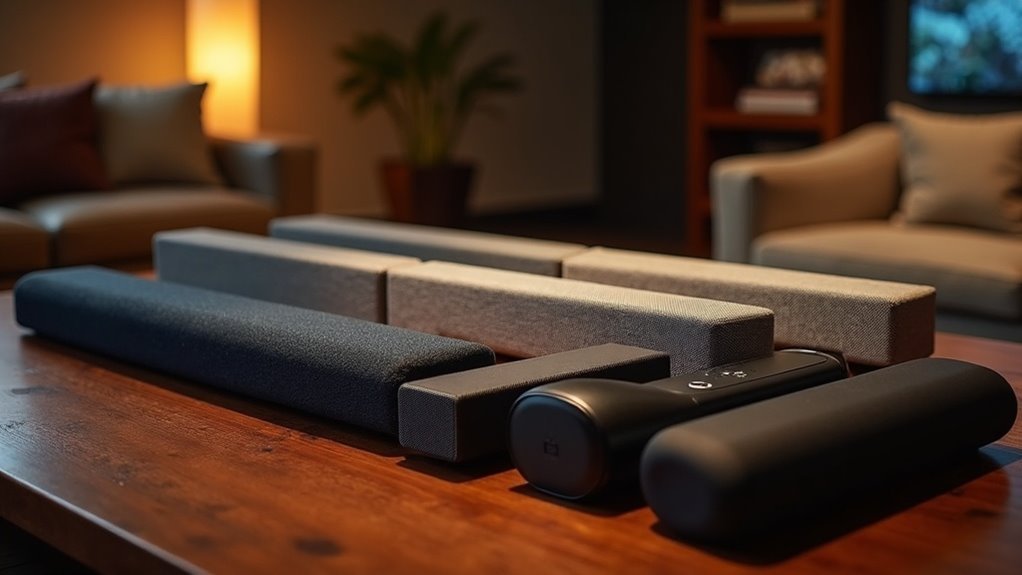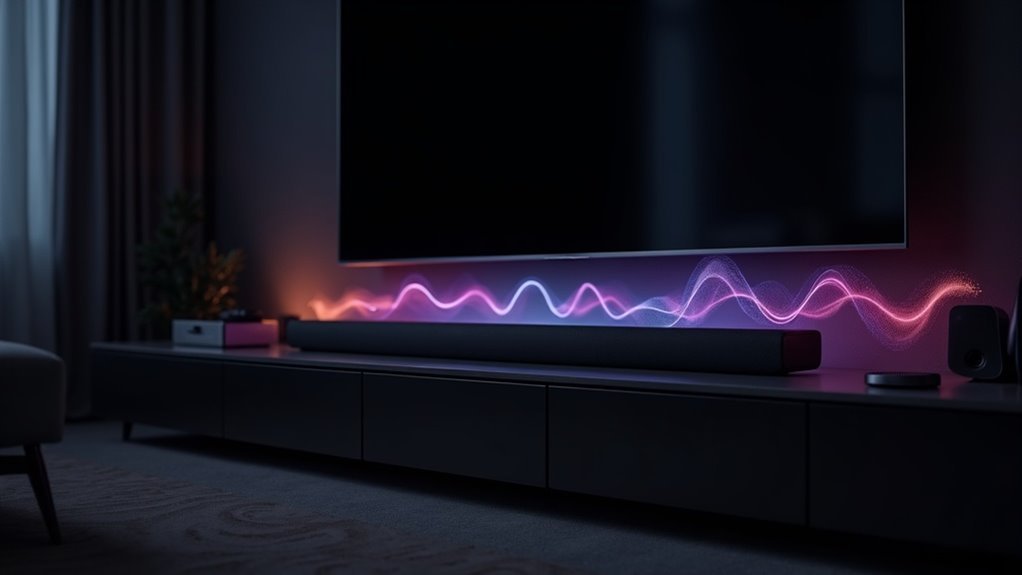
Atmos sound differs on soundbars primarily due to their reliance on upward-firing speakers, which often struggle to accurately reproduce height channels. This technology provides only a fraction of the immersive experience found in dedicated surround sound systems, limiting the capacity for true vertical sound localization. Additionally, factors such as room acoustics and speaker placement play crucial roles in the performance of soundbars. As a result, many users report a lack of authenticity in the Atmos sound experience offered by these systems. To fully appreciate the nuances of soundbars and their capabilities, it’s essential to understand both their strengths and limitations.
Key Takeaways
- Soundbars often include upward-firing speakers to create an illusion of height, but they may not match the precision of dedicated Atmos systems.
- The acoustics of the room can greatly influence how well soundbars perform, affecting the perception of height channels.
- Due to limited upward-firing speaker configurations, soundbars may not provide the same immersive experience as multi-channel setups.
- On average, soundbars may deliver only 10-15% of the immersive quality found in dedicated Atmos systems, resulting in a less impactful audio experience.
- Many users have noted minimal differences between Atmos and stereo modes, leading to some skepticism regarding the effectiveness of soundbars in delivering true immersive audio.
Understanding Dolby Atmos Technology
When exploring soundbars featuring Dolby Atmos technology, it’s essential to understand how they transform sound into a three-dimensional experience.
By utilizing object-based audio, Dolby Atmos soundbars create an immersive sound environment that dynamically places sound in space, including above you. Unlike traditional soundbar systems, which rely on fixed channels, Atmos supports up to 128 audio objects, enhancing sound quality and flexibility.
Dolby Atmos soundbars redefine audio with object-based technology, creating a dynamic, immersive soundscape that elevates your listening experience.
To fully realize this potential, Atmos-enabled content is key. Many of these soundbars include up-firing speakers that simulate height channels, offering a unique auditory experience compared to conventional setups.
However, optimal performance depends on speaker placement and the quality of the content being played.
How Soundbars Simulate Audio Experiences
Soundbars utilize upward-firing speaker technology to create an illusion of height by reflecting sound off your ceiling, simulating a more immersive audio experience.
This technique relies heavily on your room’s acoustics, as ideal reflection can enhance clarity, while poor conditions may distort sound.
However, it’s important to note that soundbars generally provide only a fraction of the depth and precision found in dedicated Atmos setups, which may limit the overall audio experience.
Upward-Firing Speaker Technology
While upward-firing speakers in soundbars aim to enhance audio experiences by simulating vertical sound, their effectiveness hinges on specific room conditions.
- Ideal ceiling height is essential for accurate sound reflection, ensuring that the audio bounces off the ceiling correctly.
- Flat surfaces help to enhance the immersive experience by allowing sound waves to travel without obstruction.
- Limited precision in vertical sound localization can diminish audio impact, making it harder to pinpoint sounds accurately.
These factors mean that soundbars may only deliver 10-15% of the immersive experience compared to dedicated Dolby Atmos systems.
As you evaluate your soundbar setup, remember that room acoustics and speaker placement play significant roles in achieving the desired auditory effect, ensuring your home theater experience is both enjoyable and fulfilling.
Audio Reflection Techniques
To create a three-dimensional audio experience, soundbars utilize audio reflection techniques that incorporate upward-firing speakers to bounce sound off ceilings and walls. This approach aims to simulate an immersive Atmos experience; however, it’s crucial to recognize that the room’s acoustics significantly influence performance.
Angled ceilings or nearby surfaces can distort sound reflections, leading to diminished audio quality. Unlike traditional surround systems, soundbars typically deliver only 10-15% of the full Dolby Atmos experience due to their limited speaker placement.
As a result, you may find it challenging to accurately localize overhead sounds, which can impact your overall enjoyment and safety during use.
Limitations of Upfiring Speakers in Soundbars
When using upfiring speakers in soundbars, you’ll encounter significant challenges with ceiling reflections that are essential for creating height channels.
The limited speaker configurations in soundbars restrict the ability to effectively simulate the immersive experience found in dedicated surround sound systems.
Additionally, the inherent directional sound limitations of soundbars can result in a less impactful audio environment, detracting from the intended Dolby Atmos experience that many users seek.
Ceiling Reflection Challenges
Although upfiring speakers in soundbars aim to create an immersive Dolby Atmos experience by bouncing sound off the ceiling, their effectiveness is heavily reliant on the acoustics of your room.
Irregular ceilings can distort ceiling reflections, which may diminish the performance of Atmos. Many users report minimal differences between Atmos and stereo modes, which can impact the overall immersion.
It’s important to note that many soundbars may deliver only 10-15% of the immersive audio quality typically found in dedicated audio setups.
For the best spatial audio experience, it’s crucial to consider your room’s characteristics before investing in a soundbar. Understanding these ceiling reflection challenges will help you make informed decisions that enhance your listening experience while ensuring you achieve the best possible sound quality.
Limited Speaker Configuration
While upfiring speakers in soundbars are designed to simulate height channels for a Dolby Atmos experience, their limited configuration poses significant challenges.
With typically one or two drivers, soundbars often struggle to replicate the multi-channel audio essential for immersive surround sound, achieving only 10-15% of a dedicated Atmos system’s capability.
This limitation impacts audio quality, as ceiling reflections and physical constraints can distort sound, diminishing clarity.
Consequently, many users notice minimal differences between Atmos and stereo modes, indicating that soundbars have difficulty fully utilizing Dolby Atmos technology without an optimized setup, ultimately affecting the overall listening experience.
Directional Sound Limitations
Soundbars with upfiring speakers face notable directional sound limitations that hinder their ability to deliver a fully immersive audio experience.
These limitations include:
- Difficulty achieving accurate spatial audio due to reliance on ceiling reflections, which can vary greatly in different environments.
- Inability to replicate the depth found in traditional Atmos setups with multiple surround speakers, leading to a less dynamic audio experience.
- Underwhelming Atmos effects that fail to engage your directional hearing, resulting in a flat soundstage.
Given that sound reproduction relies heavily on the environment, factors like ceiling texture can distort audio, diminishing overall performance.
This ultimately results in a less engaging experience, leaving you yearning for the richness and precision of dedicated multi-channel systems.
While soundbars offer convenience and space-saving benefits, these directional sound limitations can impact your overall enjoyment of movie and music experiences.
Comparing Soundbar Performance to Traditional Systems
When evaluating the performance of soundbars compared to traditional audio systems, it’s important to understand the limitations that soundbars may have in creating a truly immersive audio experience. Atmos-enabled soundbars generally provide only 10-15% of the immersive quality found in dedicated surround sound systems. Their design, which often includes fewer upward-firing speakers, can lead to noticeable audio distortion and challenges in accurately reproducing vertical sound localization. Although there are high-end soundbar models available, most soundbars do not achieve the dynamic range offered by multi-channel audio systems.
| Feature | Soundbars |
|---|---|
| Immersive Experience | Limited (10-15%) |
| Speaker Configuration | Fewer Upward-Firing |
| Vertical Localization | Inaccurate |
| Audio Distortion | Common |
| Dedicated Speakers | Absent |
User Perceptions and Feedback on Atmos Soundbars
Consumer perceptions of Atmos soundbars often reflect a blend of skepticism and mixed experiences. Many users question the claims of immersive audio, feeling let down by the actual performance.
Consumer perceptions of Atmos soundbars are often marked by skepticism, with many feeling disappointed by their immersive audio claims.
Key insights from user experiences with soundbars include:
- A fraction (10-15%) of a true Dolby Atmos experience.
- Comparisons to traditional stereo systems reveal dissatisfaction.
- Preference for dedicated surround sound setups for deeper audio immersion.
Audio professionals frequently criticize Atmos soundbars, noting their limitations in effectively translating immersive audio mixing.
While convenient, these soundbars may not meet the expectations of users seeking genuine spatial audio in their viewing experiences.
Choosing the Right Sound System for Your Needs
How do you choose the right soundbar to enhance your audio experience? Start by considering your content preferences; Dolby Atmos soundbars excel in cinematic and gaming audio, while simpler soundbars suffice for casual viewing.
Assess your room’s acoustics, as upward-firing speakers need adequate ceiling height for ideal Atmos effects. Confirm your TV supports HDMI ARC/eARC for seamless connectivity.
If your budget allows, investing in a dedicated Dolby Atmos soundbar will provide superior audio quality, maximizing immersive sound.
Finally, research user reviews and expert opinions to identify soundbars that consistently deliver outstanding performance in the Dolby Atmos category.